Loading
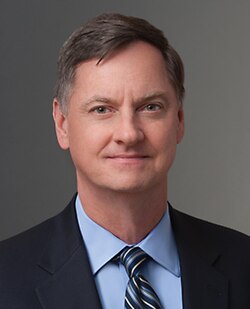
Charles L. Evans
2007–2023Reserve Bank PresidentWikipedia
Born
Jan 15, 1958
Meetings at the table
141
141/141 (0 absent)
Geography
president at Chicago (7) · where the Board comes from
In their time
Meetings by Chair
Policy rate
5.25% → 4.25–4.5%
−88 bp · Sep 2007 – Jan 2023
Seats held
- Reserve Bank PresidentChicago2007–2023
Sep 1, 2007 – Jan 8, 2023
Before the Fed
Economist · Federal Reserve Bank of Chicago
Education
- Bachelor's, Economics — University of Virginia
- PhD, Economics — Carnegie Mellon University
Terminal: PhD · economics
Dissents on the record (3)
Messrs. Evans and Kashkari dissented because they preferred to maintain the existing target range for the federal funds rate at this meeting. In Mr. Evans's view, with inflation continuing to run substantially below 2 percent and measures of inflation expectations lower than he believed to be consistent with a symmetric 2 percent inflation objective, it was important to pause in the process of policy normalization. Leaving the target range at 1 to 1-1/4 percent for a time would better support an increase in inflation expectations, increase the likelihood that inflation will rise to 2 percent and perhaps modestly beyond, and thus provide more support for the symmetry of the Committee's inflation objective. Such a pause also would better allow the Committee time to assess the degree to which earlier soft readings on inflation were transitory or more persistent.
Mr. Evans dissented because he continued to view additional policy accommodation as appropriate in circumstances where his outlook was for growth to be too slow to make sufficient progress in reducing the unemployment rate and for inflation to drop below levels consistent with the Committee's dual mandate. He continued to support the use of more-explicit forward guidance about the economic conditions under which the federal funds rate could be maintained in its current range, and he suggested that
Dissents
- 3 total dissents as a Reserve Bank President (0 tighter / 3 easier) · rank #18 in cohort