Loading
Loading

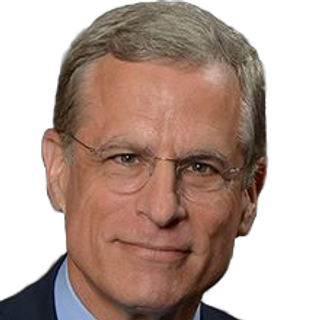
president at Dallas (11) · where the Board comes from
Apr 4, 2005 – Mar 19, 2015
Private Equity · Fisher Capital Management
Terminal: Master's · business
Mr. Fisher agreed that the Committee should be patient in beginning to normalize the stance of monetary policy. He dissented because he saw the improvement in the U.S. economic outlook since October as indicating that it likely will be appropriate to increase the federal funds rate sooner than the Committee's current statement envisions.
President Fisher dissented because he believed that the continued strengthening of the real economy, the improved outlook for labor utilization and for general price stability, and continued signs of financial market excess will likely warrant an earlier reduction in monetary accommodation than is suggested by the Committee's stated forward guidance.
Messrs. Fisher, Kocherlakota, and Plosser dissented because they did not support additional policy accommodation at this time. Mr. Fisher saw a maturity extension program as providing few, if any, benefits in support of job creation or economic growth, while it could potentially constrain or complicate the timely removal of policy accommodation. In his view, any reduction in long-term Treasury rates resulting from this policy action would likely lead to further hoarding by savers, with counterproductive results on business and consumer confidence and spending behaviors. He felt that policymakers should instead focus their attention on improving the monetary policy transmission mechanism, particularly with regard to the activity of community banks, which are vital to small business lending and job creation.
Messrs. Fisher, Kocherlakota, and Plosser dissented because they would have preferred to continue to describe economic conditions as likely to warrant exceptionally low levels for the federal funds rate for an "extended period," rather than characterizing that period as "at least through mid-2013. " Mr. Fisher discussed the fragility of the U.S. economy but felt that it was chiefly nonmonetary factors, such as uncertainty about fiscal and regulatory initiatives, that were restraining domestic capital expenditures, job creation, and economic growth. He was concerned both that the Committee did not have enough information to be specific on the time interval over which it expected low rates to be maintained, and that, were it to do so, the Committee risked appearing overly responsive to the recent financial market volatility.
Mr. Fisher dissented because he favored an increase in the target federal funds rate to help restrain inflation and inflation expectations, which were at risk of drifting higher. While the financial system remained fragile and economic growth was sluggish and could weaken further, he saw a greater risk to the economy from upward pressures on inflation. In his view, businesses had become more inclined to raise prices to pass on the higher costs of imported goods and higher energy costs, the latter of which were well above their levels of late 2007. Accordingly, he supported a policy tightening at this meeting.
Messrs. Fisher and Plosser dissented because they preferred no change in the target federal funds rate at this meeting. Although the economy had been weak, it had evolved roughly as expected since the previous meeting. Stresses in financial markets also had continued, but the Federal Reserve's liquidity facilities were helpful in that regard and the more worrisome development in their view was the outlook for inflation. Rising prices for food, energy, and other commodities; signs of higher inflation expectations; and a negative real federal funds rate raised substantial concerns about the prospects for inflation.
Messrs. Fisher and Plosser dissented because, in light of heightened inflation risks, they favored easing policy less aggressively. Incoming data suggested a weaker near-term outlook for economic growth, but the Committee's earlier policy moves had already reduced the target federal funds rate by 225 basis points to address risks to growth, and the full effect of those rate cuts had yet to be felt. While financial markets remained under stress, the Federal Reserve had already taken separate, significant actions to address liquidity issues in markets. In fact, Mr. Fisher felt that focusing on measures targeted at relieving liquidity strains would improve economic prospects more quickly and lastingly than would further reductions in the federal funds rate at this point; he believed that alleviating these strains would increase the efficacy of the earlier rate cuts. Both Messrs. Fisher and Plosser were concerned that inflation expectations could potentially become unhinged should the Committee continue to lower the funds rate in the current environment. They pointed to measures of inflation and indicators of inflation expectations that had risen, and Mr. Fisher stressed the international influences on U.S. inflation rates.
Mr. Fisher dissented because he preferred to leave the federal funds rate unchanged. The rate had been lowered by 75 basis points just one week earlier in a decision he supported, which brought the funds rate down 175 basis points since September. Given these actions, he felt that monetary policy was already quite stimulative, while headline inflation was too high at more than 3 percent over the last year. Demand-pull inflation pressures from emerging-market economies abroad appeared to be continuing, and anecdotal reports from business contacts suggested greater willingness domestically to pass rising costs through to prices. Moreover, Mr. Fisher was concerned that inflation expectations could become unanchored if the perception of negative real rates of interest were to become pervasive. At the same time, the economy appeared to be still growing, albeit at a substantially weakened pace. Given the policy tradeoffs confronting the FOMC at this time, Mr. Fisher saw the upside risks to inflation as being greater than the downside risks to longer-term economic growth, especially in light of the recent, aggressive easing of monetary policy and the lag before it would have its full effect on the economy. The Committee then turned to a discussion of selected longer-term regulatory and structural issues raised by recent financial market developments. A staff presentation began by noting that the difficulties in financial markets started with unexpectedly heavy losses on subprime mortgages and related structured securities, which led investors to question the valuations of complex structured instruments more generally and to pull back from such investments. The resulting effects in markets put pressure on some large banking organizations, particularly through losses on subprime-mortgage-related securities and other assets, and through the unplanned expansion of balance sheets triggered by the disruption of various markets in which assets were securitized. The remainder of the presentation, and the discussion by meeting participants, focused on two issues: first, the important role of credit ratings in the securitization process, including the methods used to set ratings and the way investors use ratings in making their investment decisions; and second, how weaknesses in risk management practices at some large global financial services organizations appear to have led to outsized losses at those institutions, and the reasons that such weaknesses may have emerged at some firms and not at others.