Loading
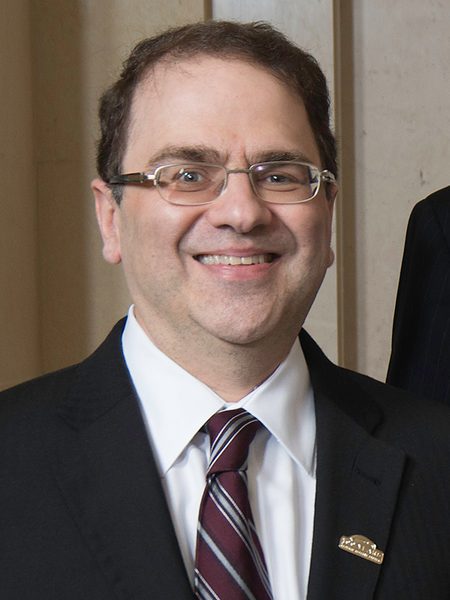
Narayana Kocherlakota
2009–2015Reserve Bank PresidentWikipedia
Born
Oct 12, 1963
Meetings at the table
55
55/56 (1 absent)
Geography
president at Minneapolis (9) · where the Board comes from
In their time
Meetings by Chair
Policy rate
0–0.25% → 0.25–0.5%
+25 bp · Oct 2009 – Dec 2015
Rate moves
1 hike · 0 cuts
49 holds at their meetings
Dissents witnessed
Seats held
- Reserve Bank PresidentMinneapolis2009–2015
Oct 8, 2009 – Dec 31, 2015
Before the Fed
Economist · Federal Reserve Bank of Minneapolis
Education
- Bachelor's, Mathematics — Princeton University (1983)
- PhD, Economics — University of Chicago (1987)
Terminal: PhD · economics
Dissents on the record (5)
Mr. Kocherlakota dissented because he believed that the Committee's decision and statement did not respond to ongoing below-target inflation and falling market-based measures of longer-term inflation expectations. In his judgment, the credibility of the Committee's 2 percent inflation target was at risk, calling for a more accommodative policy stance.
Mr. Kocherlakota dissented because he believed that, in light of continued sluggishness in the inflation outlook and the recent slide in market-based measures of longer-term inflation expectations, the Committee should commit to maintaining the current target range for the federal funds rate at least until projected inflation one to two years ahead has returned to 2 percent and should continue the asset purchase program at its current pace. Mr. Kocherlakota noted that when the Committee first reduced its asset purchases in December 2013, it said in the post-meeting statement that it would be monitoring inflation developments carefully for evidence that inflation was moving back toward its objective over the medium term; Mr. Kocherlakota indicated he saw no such evidence. Longer-Run Goals and Monetary Policy Strategy In the discussion at the January 2014 FOMC meeting regarding the annual reaffirmation of the Statement on Longer-Run Goals and Monetary Policy Strategy, participants noted that, while they were generally satisfied with the statement, it would be appropriate to consider whether any changes might be warranted before the statement was reaffirmed in 2015. The Committee subsequently referred the matter to the subcommittee on communications, which identified possible issues for consideration by the full Committee. The subcommittee then asked the staff to prepare a memorandum to the Committee exploring those issues. At this meeting, a staff presentation discussed three issues related to the existing statement that might warrant elaboration or clarification: whether inflation persistently below the Committee's 2 percent longer-run objective and inflation similarly persistently above that objective would be regarded as equally undesirable, whether additional information should be provided about the "balanced approach" that the Committee takes in promoting its two objectives under circumstances in which these objectives are judged not to be complementary, and how financial stability is linked to the Committee's mandated goals of maximum employment and price stability. Following the staff presentation, participants discussed a range of topics related to these three issues and to monetary policy communications more broadly. Participants generally thought that it was worthwhile to periodically consider possible changes to the statement, regardless of whether any were ultimately implemented. Most participants agreed that the existing consensus statement was working well as a communications tool and judged that the threshold for making changes to the document should be a high one. On the specific issues, there was widespread agreement that inflation moderately above the Committee's 2 percent goal and inflation the same amount below that level were equally costly--and many participants thought that that view was largely shared by the public. One participant suggested that the Committee should clarify the time horizon within which it seeks to achieve its inflation objective. Participants believed that the language referring to the Committee's balanced approach in promoting its objectives was appropriately broad and encompassed the views of participants. A number of participants noted that financial stability is a necessary condition for the achievement of the Committee's longer-run goals. A few of them offered suggestions for communicating more specifically how financial stability, and perhaps other asymmetric risks to the outlook, are taken into account in the setting of monetary policy. However, several other participants noted that reaching an agreement in the near term on clarifying the linkages between monetary policy and financial stability could prove challenging, in part because the issues involved are complex and need further study. Regarding broader communications issues, a number of participants suggested that the subcommittee could again investigate the feasibility and desirability of constructing a consensus forecast, building on the lessons of the experiments carried out in 2012, and several thought that further enhancements to the Summary of Economic Projections might also be worth considering. No decisions were made at this meeting, and participants generally agreed that it would be useful to discuss these issues further at upcoming meetings.