Loading
Loading

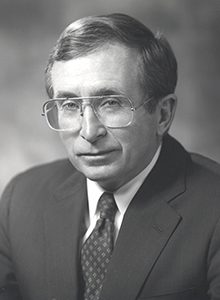
represented Kansas City (10), current job · state of record Kansas · where the Board comes from
Feb 7, 1986 – Feb 9, 1994 · confirmed Feb 5, 1986 · represents the Kansas City district (current job)
Politician · Kansas Politics
Terminal: PhD · economics
Messrs. Angell and Lindsey dissented because they believed that monetary policy was overly accommodative and needed to be adjusted promptly toward a more neutral stance to counter potential inflationary pressures in the economy. They referred to the long lags with which monetary policy exerts its effects on inflation and the consequent need to adjust monetary policy on a timely basis to foster the Committee's long-run objective of stable prices. They understood the difficulty of finding the appropriate circumstances for tightening actions so as to avoid unintended interpretations and repercussions in financial markets. In their judgment, economic and financial conditions were unlikely to be more favorable later and waiting risked undesirable inflationary consequences. Mr. Angell also stressed that the Committee should focus more directly on forward-looking indicators such as the price of gold and the estimate of the natural rate of interest provided by the rate on five-year Treasury notes. He favored an immediate increase of 50 basis points in the federal funds rate, which would enable the Committee to observe how the market adjusted the price of gold to the changed opportunity cost of holding gold. He believed that if bond market participants concluded that the Committee was using the price of gold to target the price level, five-year and ten-year interest rates would then be significantly lower than if the Committee's tightening was a belated response to a worsening outlook for inflation. He emphasized that the objective of monetary policy clearly should be stable money which produces stable prices and an ongoing optimal and stable economic growth path.
) Mr. Angell dissented because he favored a prompt move to tighten policy. In his view, monetary policy was overly expansive at this point as evidenced by what he viewed as excessive liquidity in financial markets, the negative level of real short-term interest rates, and the disappointing lack of progress toward lower inflation this year. Given indications of worsening inflationary expectations, such as the substantial rise in the price of gold, as well as projections of an increase in inflation, a policy that led to a steady federal funds rate in fact implied a further easing of an already stimulative monetary policy. In these circumstances, a tightening of policy would not involve any significant risk to the expansion but would foster changes in financial conditions and the outlook for inflation that would be more consistent with renewed progress toward price stability in 1994 and later. Declining inflation around the world and a stronger trend of productivity growth in the United States, among other factors, were providing a favorable environment for further disinflation, but those developments needed to be supported and validated by appropriate monetary policy action. At this meeting, the Committee reviewed its practices with regard to the release of information to the public. This review was undertaken in response to media reports of the purported results of the May meeting before the Committee had made public any information about that meeting. In its discussion, the Committee reaffirmed its long-standing rules governing the confidentiality of FOMC information, including the schedule that calls for releasing the minutes of a Committee meeting, along with an explanation of the Committee's decisions, a few days after the next meeting. These rules are designed to safeguard the Committee's flexibility to make needed adjustments to policy and also to provide adequate time to prepare a full report of the context and rationale for its decisions. Committee members emphasized the potential for inadvertent leaks of information in the course of general conversations with representatives of the news media or others concerning the members' views about economic developments or monetary policy. The members agreed that particular care needed to be taken for some period before and after each of its meetings.
Mr. Angell dissented because he believed that the persisting indications of rising inflation and the related deterioration in inflationary psychology called for a prompt move to tighten monetary policy. In his view, low real interest rates, a very steep yield curve, a surprisingly weak exchange value of the dollar along with the confirming price behavior of inflation-sensitive commodities such as gold underscored the need for Committee action to signal the System's continuing commitment to the eventual achievement of price stability. In his opinion, progress toward lower inflation was not likely in 1993 and 1994 in the absence of a monetary policy that was sufficiently restrictive to check inflationary expectations. He added that history demonstrated that a monetary policy focused primarily on developments in the real economy ran the risk of waiting too long to counter a worsening in inflationary expectations and thus requiring more substantial and possibly more disruptive policy changes later.
Messrs. Angell and Lindsey indicated that their concerns about the outlook for inflation prompted them to favor an immediate move to tighten reserve conditions. In their view, such an action was desirable not only to arrest the possible emergence of greater inflation but especially to promote further disinflation. They were persuaded that monetary policy currently was overly accommodative as suggested by various indicators such as recent data on consumer and producer prices, the upswing in commodity prices, the low level of real short-term interest rates, and what in their judgment was a relatively depressed foreign exchange value of the dollar given the comparative strength of the U.S. economy and international interest rate trends. They noted that the current federal funds rate was probably not sustainable in the long term and that a tightening move at this time might well avoid the need for more sizable and potentially disruptive policy actions later. Mr. Angell also emphasized the risks associated with any policy that did not firmly maintain a disinflationary trend. As he interpreted historical precedents, the typical result of a policy that tolerated some inflation was an eventual rise in inflation leading to permanently higher interest rates with adverse effects on economic activity. Indeed, he supported unpegging the federal funds rate to counter incipient price pressures showing through in commodity and finished goods prices. He believed that a clear signal of the Committee's commitment to price level stability would stabilize the price of gold along with the exchange value of the dollar and thereby provide a climate for further reductions in long-and intermediate-term interest rates. Such an approach to policy not only would assure a continuing disinflationary trend and eventual price stability, with very favorable implications for financial markets and economic growth, but it would in his view preclude an unsettling tendency for the debt markets to weaken every time newly available data appeared to suggest that economic growth was strengthening and that further monetary policy tightening actions therefore might be in the offing. In sum, such a policy would provide for the achievement of the Committee's objective of sustaining progress toward price stability which he believed was necessary for maintaining recent higher labor productivity, a permanently higher savings rate, and a prolonged period of economic expansion.