Loading
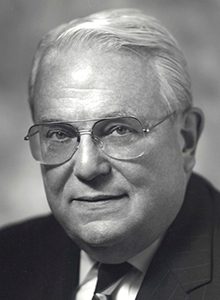
John P. Laware
1988–1995GovernorWikipedia
Born
Feb 20, 1928
Died
2004
Meetings at the table
87
87/95 (8 absent)
Geography
represented Boston (1), current job · state of record Massachusetts · where the Board comes from
In their time
Meetings by Chair
Policy rate
8.13% → 6%
−213 bp · Aug 1988 – Apr 1995
Seats held
- GovernorBoard of Governors1988–1995
Aug 15, 1988 – Apr 30, 1995 · confirmed Aug 4, 1988 · represents the Boston district (current job)
Before the Fed
Banker · Chemical Bank
Education
- Bachelor's, Biology — Harvard University (1950)
- Master's, Political Science — University of Pennsylvania (1951)
Terminal: Master's · political-science
Dissents on the record (6)
Mr. LaWare dissented because he favored an immediate policy tightening action. In his opinion, the expansion remained quite strong, with high and increasing levels of utilization in labor and capital markets, and he saw a serious risk of rising inflation. In the circumstances, he also feared that a failure by the Committee to take restraining action could heighten inflationary expectations by raising concerns about the System's commitment to the objective of sustainable, noninflationary economic growth. Temporary Increase in Reciprocal Currency Agreement with Bank of Mexico. At a meeting conducted via a telephone conference on December 30, 1994, the Committee approved a temporary increase from $3 billion to $4-1/2 billion in the System's reciprocal currency (swap) agreement with the Bank of Mexico; it was understood that all drawings, including those under the permanent tranche of the System's swap agreement with the Bank of Mexico, would be subject to a determination that appropriate terms and conditions had been met. The U.S. Treasury also increased its swap facility with the Bank of Mexico by $1-1/2 billion to $4-1/2 billion, thereby raising the total for official U.S. facilities to $9. 0 billion. The increases were in response to recent financial developments in Mexico. The Committee was informed at this meeting that the Bank of Canada would be considering an increase in its own CAN $1. 0 billion facility with the Bank of Mexico, and that additional official financing assistance was being negotiated with the other G-10 central banks and the Bank of Spain. Votes for this action: Messrs. Greenspan McDonough, Blinder, Jordan, Kelley, LaWare, Lindsey, Melzer and Parry and Ms. Yellen. Vote against this action: Mr. Broaddus. Forrestal and Ms. Phillips. Mr. Melzer voted as alternate for Mr. Forrestal. Mr. Broaddus dissented because he continued to question the desirability of the System's foreign exchange market intervention and therefore the desirability of maintaining or enlarging the swap arrangements that facilitate them. In his view continued System participation in such operations with the U.S. Treasury presented an unacceptable risk of reducing the System's credibility and its ability to conduct monetary policy effectively. He felt this risk was particularly high in this instance. Moreover, as at the March 22, 1994, meeting of the Committee, he had serious concerns about the appropriateness of the foreign exchange operations this particular enlargement would support. In his view, the expansion of this arrangement was equivalent in many respects to a fiscal policy initiative of a kind that should be explicitly authorized by the Congress.